

Growth doesn’t happen by accident. But when you’re faced with the task of launching your marketing from the ground up, it can be hard to know where to start. Without a guideline, your efforts can quickly drift, resulting in wasted time, money, and resources. In contrast, a clear, actionable marketing roadmap will point your organization toward measurable growth.
Let’s accelerate your growth by guiding you through building a marketing roadmap that matches your ambitions and resources, no matter your starting point.
Covering the Basics: What is a Marketing Roadmap?
A marketing roadmap is your organization’s step-by-step plan for reaching its business goals through marketing. It covers your objectives, identifies key initiatives, maps out timelines, assigns responsibilities, and, most importantly, establishes how you’ll measure success. In addition to serving as a calendar, it brings an interconnected strategy into your bigger picture.
Step-by-Step: How to Build a Marketing Roadmap from Scratch
1. Define Business and Marketing Goals (And How You’ll Measure Success)
Begin with clarity. Every effective roadmap starts with specific, business-aligned objectives. Don’t default to generic goals (“Get more leads” or “Raise brand awareness”). Instead, anchor marketing outcomes to your organization’s bigger picture and set SMART objectives (Specific, Measurable, Achievable, Relevant, Time-bound).
S
Specific
Specific:
Clearly state what you want to accomplish, targeting a particular area or outcome.
M
Measurable
Measurable:
Define how you will quantify success, using metrics or milestones to track progress.
A
Achievable
Achievable:
Ensure the goal is realistic and attainable, given your resources and constraints.
R
Relevant
Relevant:
Align the objective with broader business goals and current priorities, so it has meaningful impact.
T
Time-bound
Time-bound:
Set a clear deadline or timeframe by which the goal should be completed.
Examples:
- Grow pipeline contribution from marketing by 25% within one year.
- Increase retention among core customer segments by 7% in the next six months.
- Establish thought leadership and earn 12 quality backlinks from reputable industry publications this quarter.
From there, dig deeper into meaningful KPIs:
- What are your conversion rates at every funnel stage?
- Where are leads dropping off?
- How does customer lifetime value (CLTV) or cost per acquisition vary by segment or channel?
Set clear benchmarks. Create a dashboard so your team can see progress in real-time and quickly identify when course correction is needed.
2. Audit Your Market, Audience, and Competitive Realities
Modern marketing planning means diving deeper than surface-level analysis. Conduct a thorough intelligence review on your market and audience. Focus on actionable insights, rich customer data, and competitive context:
- Interview real customers. Use call recordings, NPS surveys, and support tickets to mine for challenges, language, and surprises.
- Segment your audience by needs, lifecycle stage, and buying triggers.
- Build living personas that detail: key goals, primary pain points, information sources, decision influencers, and objections.
- Map not just what your buyers say they want, but what they do: How do they research? Where do they stall? What signals readiness to engage with sales?
-
Research 3–5 top direct competitors for their key value propositions and positioning.
-
Audit their content, SEO strength, paid tactics, and messaging. Which keywords do they dominate? What content drives engagement? What channels are they investing in?
-
Identify whitespace opportunities. Where are their weaknesses? What buyer needs are they not addressing?
- Track emerging trends, regulatory changes, or technology shifts that could impact your plan (think AI’s impact on search, or new privacy laws affecting data collection).
3. Prioritize for Impact: The ICE Framework and Resource Allocation
It’s easy to overwhelm yourself with “idea overload.” Instead, use the ICE Framework, scoring key initiatives by Impact, Confidence, and Effort (on a scale of 1–10 for each):
I
Impact
Impact:
How big a difference will this make if we succeed?
C
Confidence
Confidence:
How sure are we that it’ll work, given our data?
E
Effort
Effort:
How much time and cost are required?
Total your scores for each initiative and focus on those with the greatest net value, fastest wins, or strongest alignment to current goals.
This prevents wasted effort on “random acts of marketing” and ensures team resources and budgets are used where they matter most.
4. Map Your Customer Journey in Detail, Not Guesswork
You need to understand how customers really interact with your brand before, during, and after a purchase. This is where mapping the customer journey comes in: it helps you visualize every key touchpoint, spot friction, and identify opportunities to turn happy buyers into loyal advocates.
While many plans default to the standard marketing funnel, today’s most effective organizations use the flywheel model instead. Why? Because the goal of your roadmap isn’t just to generate new leads, but to fuel ongoing growth and loyalty by delivering a remarkable customer experience at every stage.
What is the Flywheel?
The flywheel model reframes growth as a continuous cycle powered by happy customers. Instead of treating customers as an outcome at the end of a funnel, the flywheel turns that momentum into your biggest engine for future growth. Delighted customers attract more business and keep the cycle spinning.
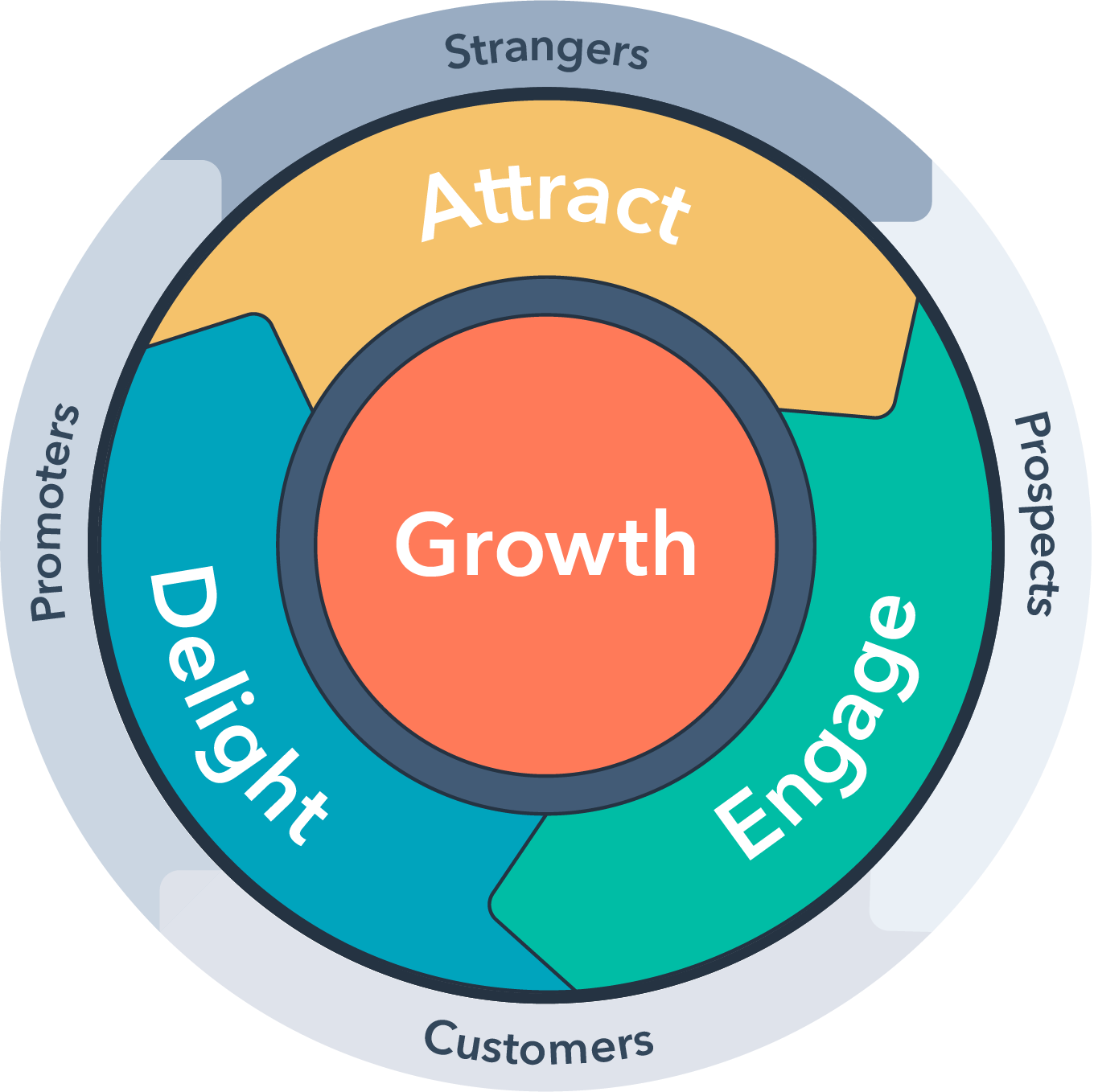
Attract:
Draw in the right people with helpful content, SEO, social media outreach, and targeted advertising. Remove obstacles to learning about your offerings, and earn attention through value, not interruption.
Engage:
Make it easy to interact, shop, and buy on customers’ terms. Personalize communications, nurture leads, and open relationships, not just close deals. Leverage automation, segmentation, and try-before-you-buy strategies to improve engagement.
Delight:
Support and empower customers to achieve their goals long after the sale. Invest in proactive service, helpful resources, feedback collection, loyalty programs, and advocacy initiatives so customers want to spread the word about your brand.
Why Mapping the Journey Fuels Your Roadmap
Mapping your customer journey using the flywheel ensures your entire marketing roadmap is built around authentic customer experience. It helps you:
- Uncover gaps and points of friction where prospects or customers might drop off.
- Prioritize high-impact tactics for each flywheel stage, so you’re not just winning new business but retaining and growing it.
- Break down silos between marketing, sales, and service so your team understands what matters most to your customers.
- Turn satisfied customers into promoters, multiplying the return on every marketing action.
Every successful roadmap is powered by true customer insight. By centering your plan on a flywheel-based journey, you’re building a system for lasting growth, customer retention, and brand advocacy.
5. Choose Tactics and Channels
Not every tactic makes sense for every business or audience. Select marketing tactics and channels based on where your buyers really spend time and what your resources actually support. Options include:
- Inbound: Blogs, newsletters, posting on social media, and downloadable resources to attract and nurture buyers.
- Outbound: Targeted LinkedIn outreach, strategic email campaigns, or direct mail for high-value accounts.
- Paid Media: Retargeted ads, social advertising, programmatic display.
- Events/Webinars: Virtual demos, roundtables, or sponsorship of relevant industry events.
- Customer Marketing: Advocacy programs, referrals, and case studies to foster loyalty and generate social proof.
6. Set Timelines and Responsibilities
A roadmap is nothing without accountability. Assign owners to key actions, estimate timelines, and schedule regular check-ins. Even a simple calendar can keep your team on track. It can also help to break large initiatives into smaller milestones. For example, launching a webinar campaign might include: Content development
- Promotion plan
- Landing page setup
- Speaker/media briefings
- Post-event follow-up sequence
7. Establish Measurement & Reporting Frameworks
Marketing is never “set it and forget it.” Before you launch, define how you’ll:
- Track every meaningful metric (Google Analytics, CRM dashboards, UTM links)
- Regularly review performance, not just at the end of campaigns, but weekly and monthly
- Set aside time for “test and learn”: Run A/B tests, experiment with new offers, pause what doesn’t work
Build a practice of regular debriefs. What did you try, what were the learnings, and how will you adjust priorities or tactics going forward?
Common Pitfalls (and How to Avoid Them)
Even the best intentions can be sidetracked. As you build your marketing roadmap, watch for these frequent pitfalls that can undermine your strategy and slow your momentum.
-
Over-complicating Your Plan: Keep it simple, actionable, and visible. A plan you’ll actually use beats a 30-page binder that collects dust.
-
Losing Focus: Resist the urge to chase every marketing trend. Stay tied to your objectives and strategic priorities.
-
Failing to Measure: Without measurement, you’re flying blind. Set up tracking from the start.
Build Your Marketing Roadmap with an Experienced Pathfinder
We know it’s not easy to find the way forward when marketing feels unfamiliar. That’s where Sharp Wilkinson comes in. Our team becomes an extension of yours. We’re immersed in your goals, accountable for your growth, and focused on strategic impact.
Our approach is data-driven: insights over assumptions, clarity through analytics. We’ve helped clients of all shapes and sizes move from uncertainty to measurable progress.






Growth doesn’t happen by accident. But with the right team helping you create the right marketing roadmap, you can trade your overwhelmed feeling for clarity and execute with confidence. If you’re ready to accelerate your results, we’d love to help. Schedule a consultation with the Sharp Wilkinson team and let’s build your marketing roadmap together.
![Boost Your Online Visibility! Unlock the secrets to a top-ranking website with our FREE SEO Guide for Small Businesses. [Download Your Guide Now!]](https://sharpwilkinson.com/wp-content/uploads/2025/06/20250616_SPW_SEOSmallBizGuideCTA.png "20250616_SPW_SEOSmallBizGuideCTA_1080x1080 • Sharp Wilkinson")